
Can You Get Dental Implants If You Have Bone Loss? The Truth
One of the most common reasons people are told they cannot get dental implants is bone loss. They visit a dentist, get a scan, and walk out having been told their jaw does not have enough bone to support implants. For many patients, that feels like the end of the road, as though the only options left are dentures or simply living with missing teeth.
Table of Contents
- Why Bone Loss Happens After Tooth Loss
- Why Bone Volume Matters for Dental Implants
- Solution 1: Bone Grafting
- Solution 2: Sinus Lift
- Solution 3: All-on-4 Dental Implants
- Solution 4: All-on-6 Dental Implants
- Solution 5: Mini Implants
- The Importance of a Thorough Assessment
- The Bottom Line
- Frequently Asked Questions
But here is the truth: bone loss does not automatically disqualify you from getting dental implants. In fact, advances in implant dentistry over the past two decades have made it possible for patients with significant bone loss to still achieve permanent, fixed tooth replacement that was simply not available to them before. The situation is more nuanced than a simple yes or no, and understanding what your options actually are is the most important first step.
This article explains exactly what bone loss means for dental implants, what the available solutions are, and why a second opinion from an experienced implant dentist in Agoura Hills is worth getting before you write off implants entirely.
Why Bone Loss Happens After Tooth Loss
To understand why bone loss affects implant candidacy, it helps to understand why it happens in the first place.
Your jawbone is living tissue that responds to stimulation. When natural teeth are in place, the forces generated by biting and chewing are transmitted through the tooth roots into the bone, stimulating it and maintaining its density and volume over time. When a tooth is lost, that stimulation stops. Without the signals it needs to maintain itself, the bone in that area begins to resorb, essentially breaking down and shrinking over time.
This process starts within the first few months of tooth loss and continues gradually for years. The longer a tooth has been missing, the more bone loss is likely to have occurred. Patients who have worn dentures for many years often experience the most significant bone loss because dentures sit on top of the gums and provide no stimulation to the bone beneath them at all.
Understanding this helps explain why acting sooner after tooth loss is always better, but it does not mean that patients with existing bone loss have run out of options.
Why Bone Volume Matters for Dental Implants
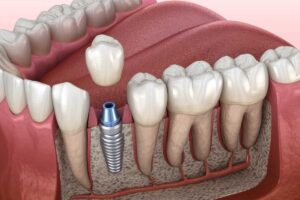
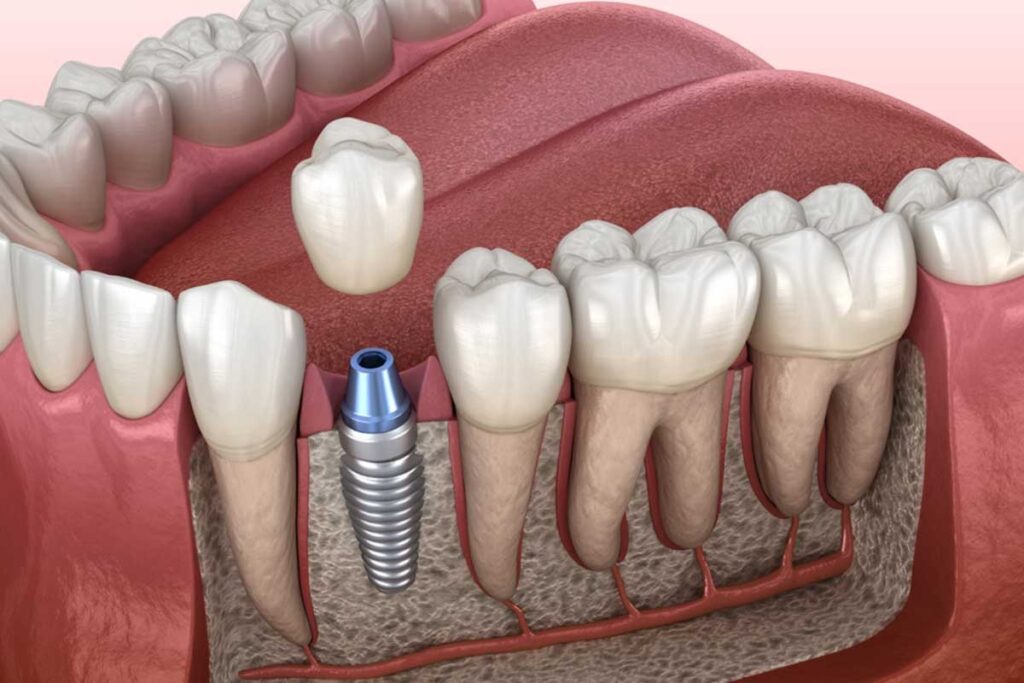
Dental implants work by placing a titanium post directly into the jawbone. For the implant to be stable, integrate successfully with the bone, and function reliably over the long term, there needs to be enough bone present to surround and support the post on all sides.
When bone volume is insufficient, the implant may not achieve adequate primary stability at placement, meaning it does not have a secure enough initial anchorage to heal and integrate properly. This is the reason bone loss can complicate implant treatment. It is not that implants cannot be placed; it is that the bone needs to be assessed carefully and, in some cases, augmented or approached differently to ensure a successful outcome.
The good news is that experienced implant dentists have a range of solutions for patients with bone loss, and in many cases patients who have been told they are not candidates for implants elsewhere find that they do have viable options when assessed properly.
Solution 1: Bone Grafting
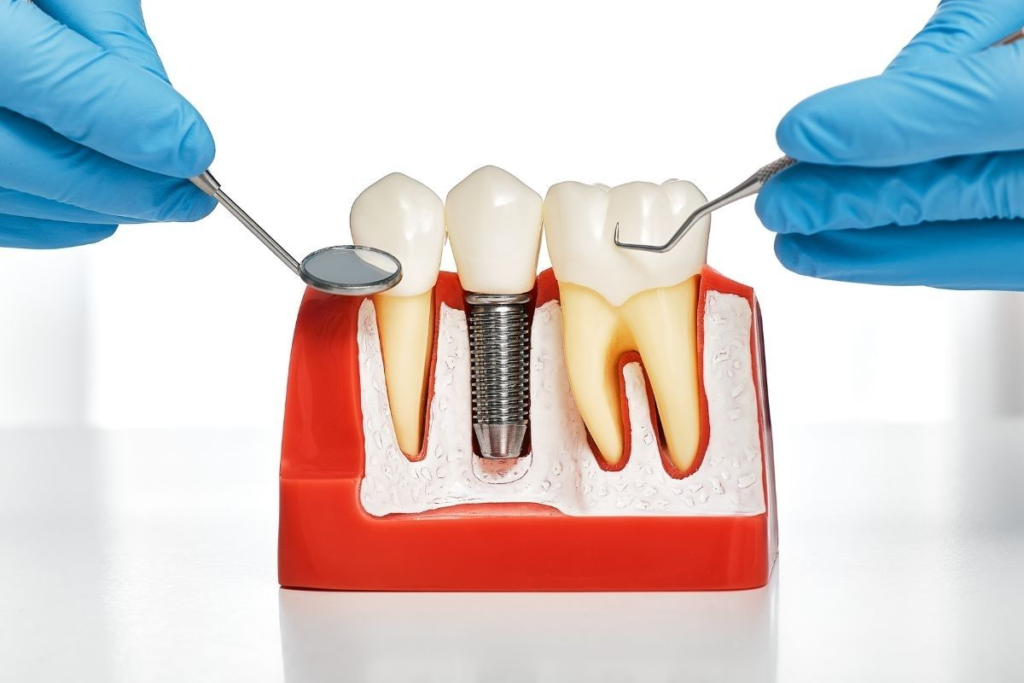
Bone grafting is the most common solution for patients who do not have enough bone volume for conventional implant placement. The procedure involves adding bone material to the deficient area to rebuild the jaw to a volume that can support implants.
The bone material used in grafting can come from several sources:
- Autograft: bone taken from another part of the patient’s own body, typically from the chin, jaw, or hip
- Allograft: processed bone from a donor source, sterilized and prepared for safe clinical use
- Xenograft: bone derived from animal sources, most commonly bovine, processed for biocompatibility
- Synthetic bone substitutes: laboratory-made materials that mimic the structure of natural bone and support new bone growth
Once the graft is placed, a healing period of several months is required to allow the new bone to integrate and mature before implant placement can proceed. The timeline varies depending on the extent of grafting required, but for most patients the wait is worthwhile; the end result is a solid bone foundation that supports implants just as effectively as naturally sufficient bone.
Solution 2: Sinus Lift
For patients who need implants in the upper back teeth region, a sinus lift is often required alongside bone grafting. This is because the sinus cavities sit very close to the roots of the upper molars and premolars, and when these teeth are lost, the sinus floor can drop down into the space where the bone used to be, leaving very little room for implant placement.
A sinus lift procedure involves gently lifting the sinus membrane and placing bone graft material in the space below it, effectively creating additional bone height in the upper jaw. Once healed, this area provides a solid foundation for implant placement in one of the most challenging anatomical regions of the mouth.
Sinus lifts are a well-established and highly predictable procedure when performed by an experienced implant dentist. At Agoura Advanced Dentistry, patients considering dental implants in Agoura Hills in the upper jaw receive a thorough 3D imaging assessment beforehand to determine whether a sinus lift is needed and plan the procedure with complete precision.
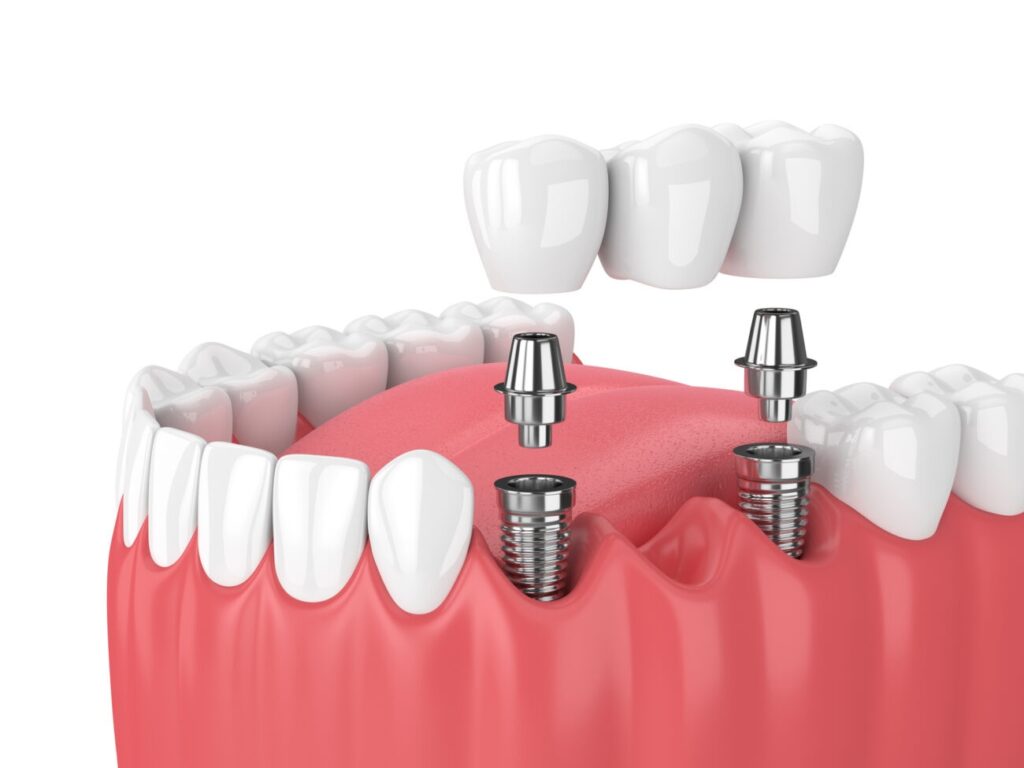
Solution 3: All-on-4 Dental Implants
For patients who have experienced significant bone loss across a full arch of teeth, All-on-4 dental implants in Agoura Hills offer a particularly compelling solution, and one that often does not require bone grafting at all.
The All-on-4 system uses four strategically placed implants to support a complete arch of fixed teeth. Two implants are placed vertically at the front of the jaw where bone is typically better preserved, and two are angled at the back to maximise contact with the available bone in the posterior region. This angled placement is specifically designed to work with reduced bone volume, allowing many patients with bone loss who would not qualify for conventional implants to still achieve a complete, permanent smile without the time and cost of extensive bone grafting.
All-on-4 has an excellent long-term track record and is one of the most significant advances in implant dentistry for patients with compromised bone volume. For many patients who have been told bone grafting is their only option, All-on-4 represents a faster, simpler, and often more cost-effective alternative worth exploring.
Solution 4: All-on-6 Dental Implants
For patients with moderate bone loss who have more bone available than an All-on-4 candidate but still face some challenges with conventional individual implants, All-on-6 dental implants in Agoura Hills offer another excellent full arch option.
All-on-6 uses six implants to support a complete arch restoration, providing greater stability and load distribution than All-on-4 while still requiring less bone volume than replacing every tooth with individual implants. For patients whose bone loss is moderate rather than severe, All-on-6 can deliver an outstanding result with enhanced long-term durability and strength.
Solution 5: Mini Implants
For patients with very limited bone volume who are not suitable for standard diameter implants, mini implants are a smaller diameter alternative that requires less bone for placement. While mini implants have limitations in terms of what they can support compared to standard implants, they can be a viable solution for certain patients, particularly for stabilising lower dentures in patients with severe bone loss who are not candidates for more comprehensive implant treatment.

Ready to take action on your dental health? Find us on Google Maps and come in — we are easier to reach than you think. Get Directions to Agoura Advanced Dentistry.
The Importance of a Thorough Assessment
One of the most important things to understand about bone loss and dental implants is that not all assessments are equal. A dentist who tells you that you are not a candidate for implants based on a basic X-ray may be giving you an incomplete picture. Advanced 3D cone beam imaging provides a far more detailed and accurate view of bone volume, density, and anatomy, and can reveal options that a standard two-dimensional X-ray would miss entirely.
If you have been told that bone loss rules out implants for you, getting a second opinion from an experienced implant dentist who uses 3D imaging is absolutely worth doing before you accept that conclusion. Many patients who were told elsewhere that implants were not possible have gone on to receive successful implant treatment after a more thorough assessment identified solutions that had not previously been considered.
The Bottom Line
Bone loss does not automatically mean dental implants are off the table. Bone grafting, sinus lifts, All-on-4, All-on-6, and mini implants are all solutions that extend implant candidacy to patients who might otherwise have been told their options were limited to dentures. The right solution depends on the extent and location of your bone loss, your overall oral health, and your treatment goals.
The most important step is getting a thorough assessment from an experienced implant dentist who uses advanced 3D imaging and takes the time to explore every available option before reaching a conclusion. If you are in Agoura Hills, Westlake Village, Calabasas, Thousand Oaks, Oak Park, or Newbury Park and have questions about implants and bone loss, Agoura Advanced Dentistry offers free consultations where Dr. Kambiz Kamangar DDS will give you an honest, thorough assessment of your specific situation and walk you through every option available to you.
Frequently Asked Questions
How much bone do you need for dental implants?
The amount of bone required varies depending on the type and size of implant being placed. Standard implants typically require a minimum of 1mm of bone surrounding the implant on all sides. Your dentist will assess your bone volume using 3D imaging and advise on whether grafting or an alternative approach is needed.
How long does bone grafting take before implants can be placed?
The healing period after bone grafting typically takes 3 to 6 months depending on the extent of grafting required. During this time, the grafted bone integrates and matures before implant placement can proceed safely.
Can All-on-4 implants be placed without bone grafting?
In many cases, yes. The angled placement of the posterior implants in the All-on-4 system is specifically designed to maximise use of available bone, allowing many patients with bone loss to proceed without grafting. A thorough assessment will confirm whether this applies to your specific situation.
Does bone loss get worse over time?
Yes. Bone loss is a progressive process that continues as long as the area is not stimulated by tooth roots or implants. This is why acting sooner after tooth loss generally results in better implant outcomes and fewer complications related to bone volume.
Will dental implants stop further bone loss?
Yes. Once a dental implant is placed and integrated, it stimulates the jawbone just like a natural tooth root, preventing further bone loss in that area and helping to maintain the density and volume of the surrounding bone over time.